

Plant Propagation
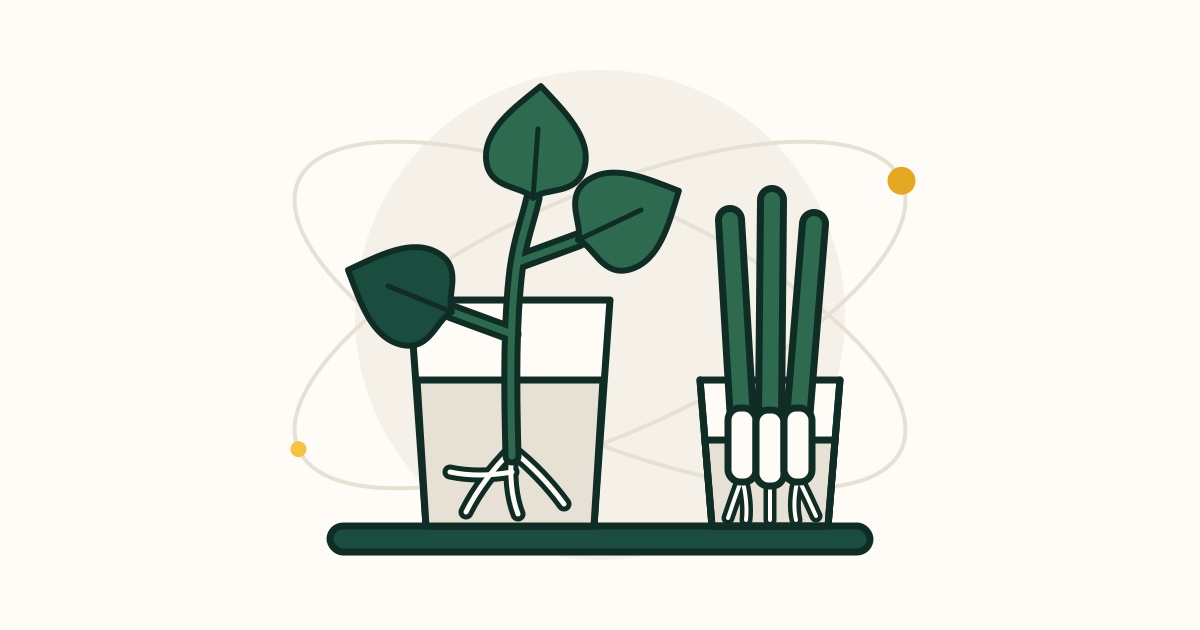
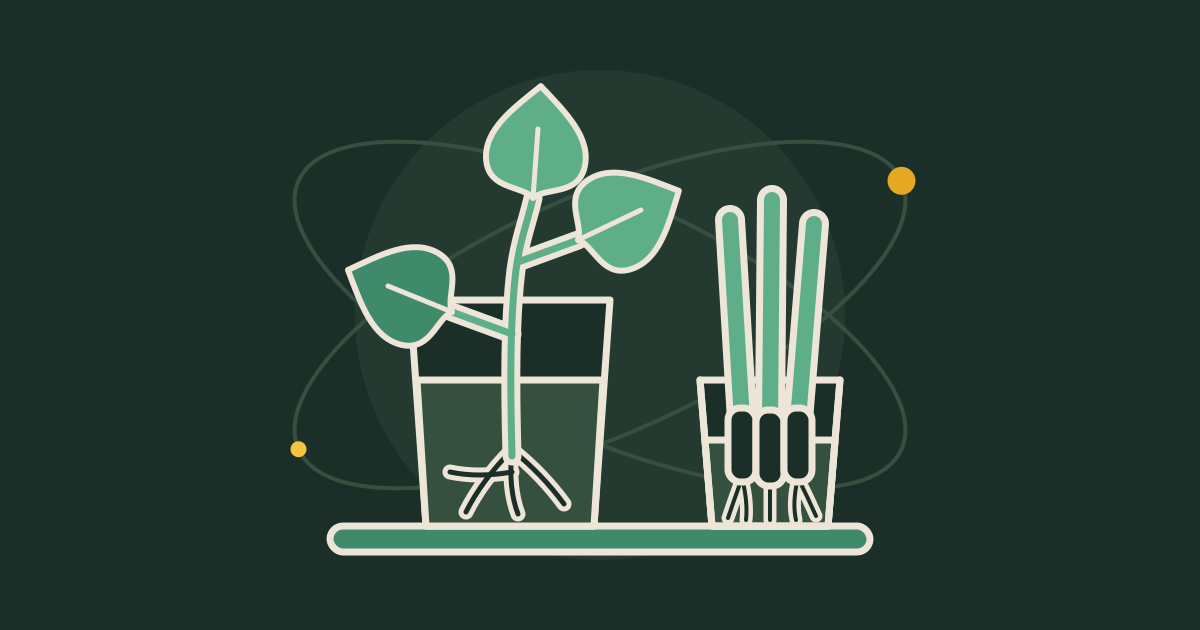
Plant means making new plants from pieces of ones you already have. A trailing houseplant like pothos, a bunch of supermarket basil or mint, or the root ends of green onions will grow roots in a glass of water on a windowsill. The session is taking and setting the cuttings the right way; the roots come on their own over the next days and weeks.
What you'll do
Take 2 or 3 cuttings from a pothos, basil or mint, or keep the root ends of a bunch of green onions, cut each one below a node, strip the leaves that would sit underwater, and stand them in glasses of water on a bright windowsill with a dated label. Roots or new shoots show up over the following days, and the guide tells you what to look for.
At a glance
- Time
- 15 minutes for your first session
- Cost
- Nothing to buy. It uses things you already have at home.
- You need
- A plant to take cuttings from, Clear glasses or jars, Sharp scissors or kitchen shears, Room-temperature tap water, Masking tape and a pen
- Members
What you need
Required
- A plant to take cuttings from × One of: a pothos (or heartleaf philodendron or tradescantia) with vines at least 8 inches (20 cm) long; a bunch or pot of basil or mint with 3 or more stems at least 5 inches (12 cm) long; or 3 to 5 green onions with their little roots still on the white ends · $0 · household
Pothos roots most reliably; herbs and green onions show results fastest. Supermarket basil and mint work whether cut in a bunch or growing in a pot. Pick firm, green stems with no flowers, no black spots and no slime. Green onions only regrow if the white end still has its roots, so check before you use them in cooking. Pothos, philodendron and tradescantia sap can irritate skin and the leaves are toxic to cats and dogs if chewed, so wash your hands after cutting and keep the glasses where pets cannot reach.
Alternatives: A friend's houseplant (ask for a 6 inch, 15 cm, vine tip), Spider plant babies (the small plantlets on long stems)
- Clear glasses or jars × 2 or 3, about 8 to 12 oz (250 to 350 ml), at least 3 inches (8 cm) tall · $0 · household
Drinking glasses, rinsed jam or spice jars, or a small vase. Clear glass lets you watch the roots form. A narrow mouth holds stems upright better than a wide bowl. Wash with hot soapy water and rinse well first.
Alternatives: A clean clear plastic cup, A shot glass or egg cup for green onion ends
- Sharp scissors or kitchen shears × 1 pair, plus rubbing alcohol on a cotton ball or hot soapy water to clean the blades · $0 · household
Sharp blades cut cleanly; dull ones crush the stem, and crushed stems rot more easily. A clean kitchen knife on a cutting board also works.
Alternatives: A sharp kitchen knife and a cutting board
- Room-temperature tap water × About 2 cups (500 ml) · $0 · household
Ordinary tap water is fine. Avoid very cold or hot water, which shocks fresh cuttings.
Alternatives: Filtered or rain water
- Masking tape and a pen × A 2 inch (5 cm) strip per glass · $0 · household
For writing the plant and the date on each glass, so you know how many days it has been.
Alternatives: A sticky note under the glass
Nice to have
- Fresh green onions or a basil bunch from the grocery store × 1 bunch · $1-4 · purchased
Only if you have no houseplant or herbs at home. Choose green onions with roots still attached and basil with no flower buds.
- Small pots and potting mix, for later × 2 or 3 pots about 4 inches (10 cm) across, with drainage holes, and a small bag of potting mix · $6-12 · purchased
Not needed today. Once roots are about 1 inch (2.5 cm) long, in 1 to 6 weeks depending on the plant, you can pot the cuttings up. A yogurt cup with holes poked in the bottom works too.
How to do it
Pick up where you left off
Step ·
Rinse 2 or 3 clear glasses and fill each with room-temperature tap water to about 2 inches (5 cm) deep; for green onions, 1 inch (2.5 cm) is enough. Choose the spot now: a windowsill or table that gets bright light most of the day, between about 65 and 75°F (18 to 24°C). Basil and mint like a sunny window; pothos prefers bright light without hours of hot afternoon sun on the glass. It worked if each glass has clear water at the right depth and you have a bright spot cleared for them. Common mistake: a cold winter windowsill or the top of a radiator. Cuttings stall in the cold and cook in the heat, so feel the spot with your hand first.
Show helpHide help
Tip: Common mistake: cutting a leaf without a node. Every cutting needs at least one node, the joint where a leaf meets the stem, under water. Leaves and stem between nodes cannot grow roots.
A is the joint on a stem where a leaf grows out, and it is the only place roots can start. On pothos, look where each leaf stalk meets the vine: there is a slight bump, often with a small brown nub (an ) on the opposite side. On basil and mint, nodes are where a pair of leaves grows out opposite each other. Pick 2 or 3 healthy stems and, for each, count down from the tip: you want a piece with 2 to 4 leaves (pothos) or 4 to 5 leaf pairs (herbs). Pinch off any flower buds at the top of herbs. For green onions there is no node to find: the roots grow from the flat white base, so just check each one still has its little roots. It worked if you can touch the node where you will cut on each stem. Common mistake: taking a single leaf with just its leaf stalk and no piece of vine. It may stay green for weeks, but without a node it will never grow into a plant.
Show helpHide help
node: The joint on a stem where a leaf grows out. It holds the cells that can turn into new roots or shoots.
aerial root: A small root that grows from a stem above the soil. On pothos it is a brown nub next to a node, and it often grows into a water root first.
Tip: Common mistake: cutting a leaf without a node. Every cutting needs at least one node, the joint where a leaf meets the stem, under water. Leaves and stem between nodes cannot grow roots.
Wipe the scissor blades with rubbing alcohol, or wash them in hot soapy water and dry them. Pothos: cut the vine about 1/4 inch (6 mm) below a , so each piece is 4 to 6 inches (10 to 15 cm) long, a little longer if its leaves are far apart, with at least 2 nodes. Basil or mint: cut the top 4 to 6 inches (10 to 15 cm) of a stem, just below a node. Green onions: cut off the green tops for cooking and keep the white ends about 2 inches (5 cm) long, roots attached. Make each cut in one clean snip. It worked if the cut ends are clean and green, not squashed or torn, and each herb or pothos piece has 2 or more nodes. Common mistake: halfway between nodes and leaving a long bare stub at the bottom. That stub sits in the water, grows no roots and is the first part to rot. Trim it back to just below the lowest node.
- The beginner's guide to propagating herbs (Gardenary)(8 min)
- How to regrow green onions from scraps (Epic Gardening)(5 min)
Show helpHide help
cutting: A piece of stem cut from a plant so it can grow its own roots and become a new plant.
Tip: Common mistake: cutting a leaf without a node. Every cutting needs at least one node, the joint where a leaf meets the stem, under water. Leaves and stem between nodes cannot grow roots.
Hold each next to its glass to see where the waterline will be. Pull or snip off every leaf that would sit below it: on pothos, that is usually the leaf at the lowest , snapped off close to the vine so the node is left bare. On basil and mint, pinch off the leaves at the bottom 1 or 2 nodes so about 2 inches (5 cm) of stem is bare, keeping at least 2 pairs plus the tip at the top. Leave green onions as they are. It worked if each cutting has a bare stem with 1 or 2 bare nodes at the bottom and its remaining leaves sit well above the water. Common mistake: leaving leaves in the water. They rot within a couple of days, cloud the water and can take the stem with them.
Show helpHide help
Tip: Common mistake: cutting a leaf without a node. Every cutting needs at least one node, the joint where a leaf meets the stem, under water. Leaves and stem between nodes cannot grow roots.
Stand the cuttings in the glasses, cut end down, so at least 1 bare is under water and no leaves touch it. Put no more than 3 cuttings in a glass so water and air can reach every stem. Rest a long pothos vine against the rim. Stand green onion ends with roots down and the cut tops above the water. Write the plant and today's date on a strip of masking tape and stick it on each glass. Carry them to the spot from step 1. It worked if every stem stands up on its own with a bare node under water, all leaves are dry and above the waterline, and each glass has a dated label. Common mistake: giving up on a basil or mint that droops within the hour. That is normal for a fresh cut; give it a day before you worry, and keep it out of hot direct sun until it perks up.
Show helpHide help
Tip: Common mistake: cutting a leaf without a node. Every cutting needs at least one node, the joint where a leaf meets the stem, under water. Leaves and stem between nodes cannot grow roots.
Set a phone reminder to pour out and refill the water every 2 to 3 days, and every day for green onions, with the cuttings lifted out, rinsed and set back at the same depth. Then look at the glasses whenever you pass. What to expect: green onions push a new green shoot up from the center in 2 to 4 days and are a few inches tall in about a week. Mint usually shows small white root bumps at the nodes in 5 to 10 days. Basil shows its first roots in about 1 to 2 weeks. Pothos is the slowest: first white nubs at the in about 1 to 3 weeks, and roots 1 inch (2.5 cm) long in 3 to 6 weeks. A stem that turns brown and soft or the water going slimy means rot: cut the stem back above the soft part, strip a leaf to make a fresh bare node, wash the glass and start again. You did it: your cuttings are set and dated. Next session, once the roots reach about 1 inch (2.5 cm), pot them in small pots of potting mix, or keep snipping the green onions and let them grow back.
Show helpHide help
pot up: Move a rooted cutting from water into a small pot of potting mix so it can grow into a full plant.
Tip: Common mistake: cutting a leaf without a node. Every cutting needs at least one node, the joint where a leaf meets the stem, under water. Leaves and stem between nodes cannot grow roots.
Tips
Common mistake: a leaf without a . Every cutting needs at least one node, the joint where a leaf meets the stem, under water. Leaves and stem between nodes cannot grow roots.
Take 3 cuttings even if you only want 1 plant. Not every roots, and having a spare lets you compare which spot or plant does best.
Cloudy water is the first sign of trouble. Change it as soon as you see it, rinse the stems and wipe the inside of the glass, even if your 2 or 3 days are not up.
once roots are about 1 inch (2.5 cm) long rather than waiting months. Roots that grow in water are more fragile than soil roots, and long water roots take longer to settle into potting mix.
Mint spreads fast through a garden bed underground. When it is time to plant it out, give it its own pot.
Glossary
- propagation
- Making new plants from an existing one, for example by rooting a cut piece of stem.
- node
- The joint on a stem where a leaf grows out. It holds the cells that can turn into new roots or shoots.
- cutting
- A piece of stem cut from a plant so it can grow its own roots and become a new plant.
- aerial root
- A small root that grows from a stem above the soil. On pothos it is a brown nub next to a node, and it often grows into a water root first.
- pot up
- Move a rooted cutting from water into a small pot of potting mix so it can grow into a full plant.
Communities
Resources
- Propagating Houseplants (Penn State Extension)Explains leaf, tip and stem cuttings, why a stem cutting needs at least two nodes, and other methods such as division and air layering, from a university extension service.
- How to Grow Basil from Cuttings (Homestead and Chill)A photo walk-through of rooting basil in water, from cutting the stem to potting it up when the roots are 1 to 2 inches long.
- Summer Rayne Oakes, Plant One On Me (YouTube)A long-running houseplant care channel with many propagation and repotting videos, good once your first cuttings have rooted.
- Epic Gardening (YouTube)A large gardening channel covering herbs, regrowing kitchen scraps and container growing, for taking your rooted cuttings further.
Frequently asked questions
How long until I see roots?
It depends on the plant. Green onions grow a new shoot in 2 to 4 days. Mint usually shows roots in 5 to 10 days and basil in 1 to 2 weeks. Pothos is slower: first nubs in 1 to 3 weeks, and roots long enough to pot in 3 to 6 weeks. Cool rooms and dim light slow everything down.
Do I need rooting hormone?
No. Pothos, basil, mint and green onions all root in plain water. Rooting hormone powder can speed up harder plants, but it is not needed for these.
Why is my cutting turning brown and mushy?
It is rotting, usually from a leaf left in the water, water left unchanged too long, or a crushed cut. Cut the stem back above the soft part, strip a leaf to make a new bare node, wash the glass, and set it in fresh water.
Can I just leave the cuttings in water forever?
Pothos can live in water for a long time if you change it regularly, but it grows fuller and stronger in soil. Herbs need soil to keep growing well. Green onions in water regrow 2 to 4 times before they get weak.
Which plant should I start with?
For the quickest result, green onions: you see new growth within days. For the easiest houseplant, pothos: it almost always roots, just slowly. Mint is the most forgiving herb, and basil is a close second.
Will cuttings hurt the plant I take them from?
No, if you take no more than about a quarter of the plant. Basil and mint branch out below the cut and grow bushier, and pothos grows new vines from the nodes left behind.
Something off in this guide?