

Beatboxing
Turn your mouth into a drum machine. With three sounds, a kick, a and a , you can make a real beat in five minutes, anywhere, with nothing but your lips, tongue and breath.
What you'll do
Learn the kick, hi-hat and snare sounds and loop the basic "B t Pf t" beat 8 times in a row.


At a glance
- Time
- 5 minutes for your first session
- Cost
- Nothing to buy. It uses things you already have at home.
- Members
What you need
Nice to have
- A glass of water · $0 · household
Your lips dry out quickly at first; a sip helps the sounds stay crisp.
- Your phone to record yourself · $0 · household
A 10-second recording shows you which sounds are clear.
How to do it
Pick up where you left off
Step ·
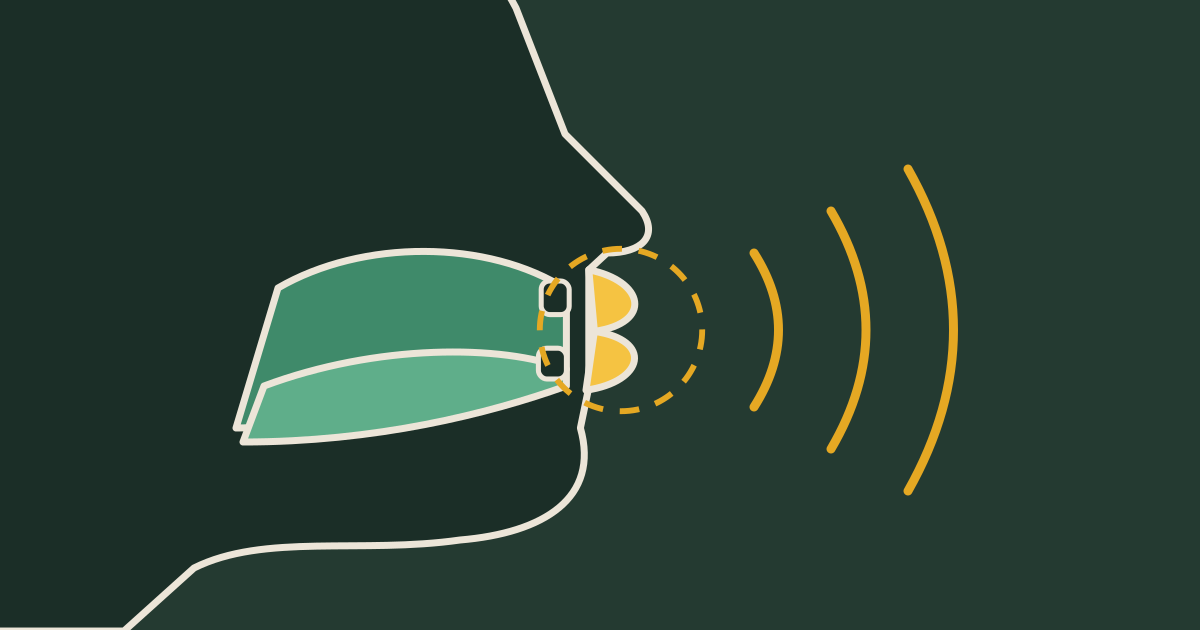
Press your lips together firmly, build a little air pressure behind them, then pop them open with a short burst of air, like saying the letter "b" without any vowel after it. Do not use your voice: put two fingers on your throat and you should feel no buzz. Do 10 kicks, one per second. It worked if you hear a short, punchy pop and feel air hit your hand held 2 inches from your mouth. The common mistake is saying "buh" with a vowel; that sounds like talking, not a drum.
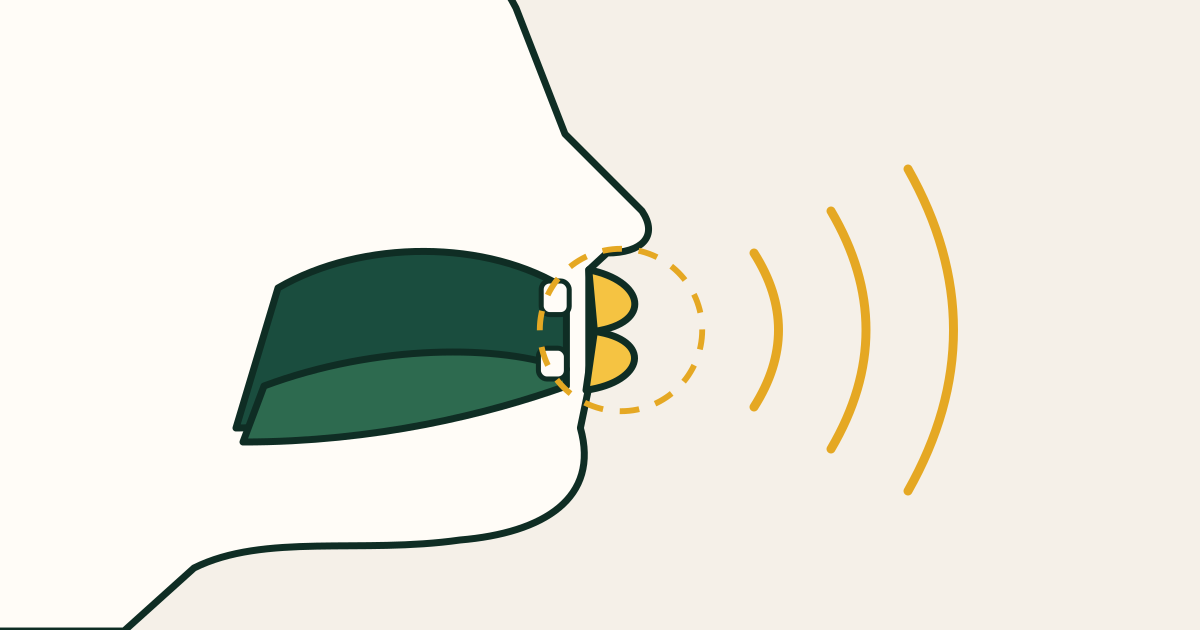
Kick: lips closed, then pop. The ring marks where the sound starts. Show helpHide help
kick drum: The deep bass drum in a drum kit; in beatboxing, a voiceless B.
Tip: Common mistake: using your voice. Real beatbox drums are voiceless; hum only when you mean to add a bass line or melody.
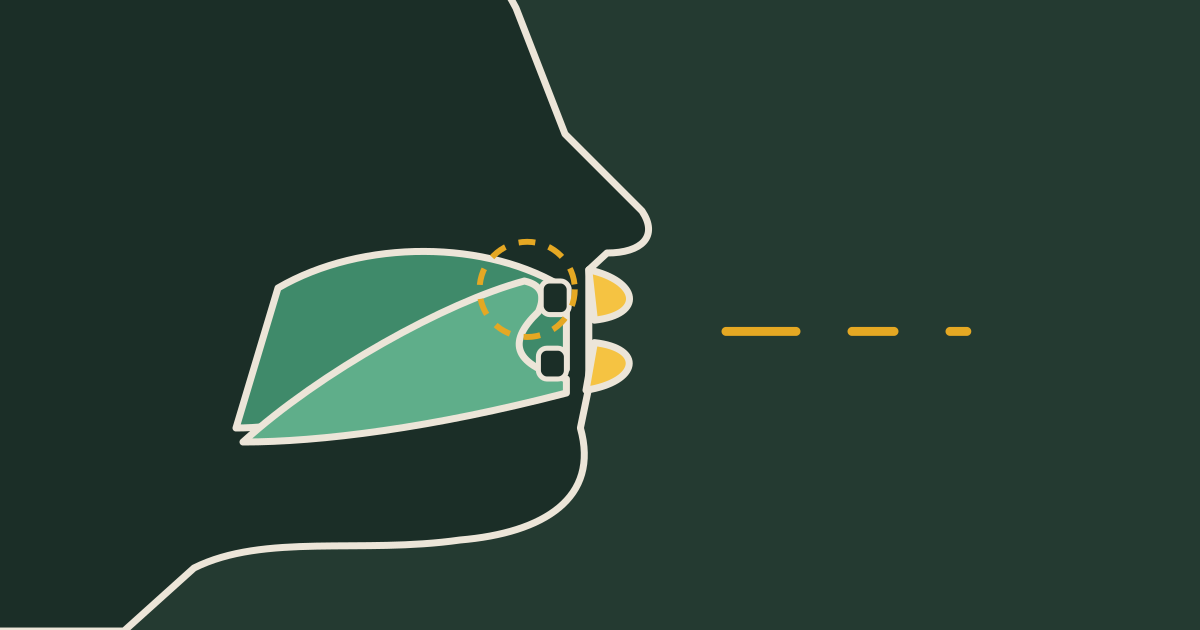
Touch the tip of your tongue to the ridge just behind your top front teeth, then flick it down while pushing a tiny puff of air, making a "t" with no vowel. Keep it short and light, quieter than the kick. Do 10, then do them twice as fast. You have it when it sounds like a "ts" tick, not "tuh". If it sounds wet or hissy, you are letting too much air out; make the puff smaller and the tongue flick faster.
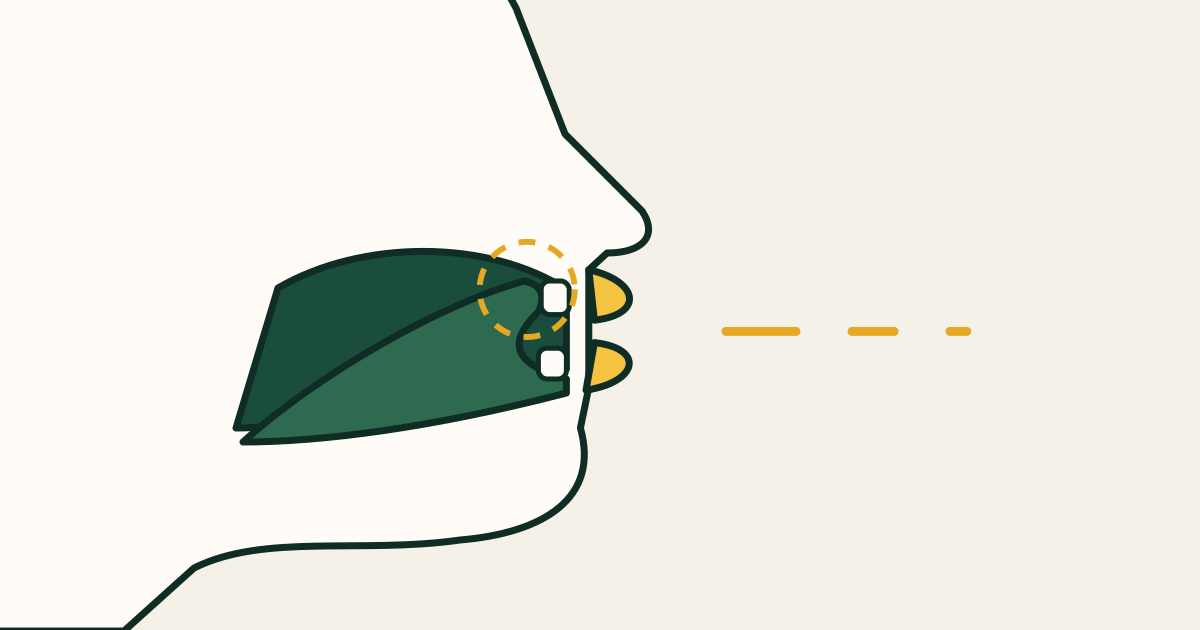
Hi-hat: tongue tip on the ridge behind your top teeth, then flick it down. Show helpHide help
hi-hat: A pair of small cymbals that keep time with light ticks; in beatboxing, a short t.
Tip: Common mistake: using your voice. Real beatbox drums are voiceless; hum only when you mean to add a bass line or melody.
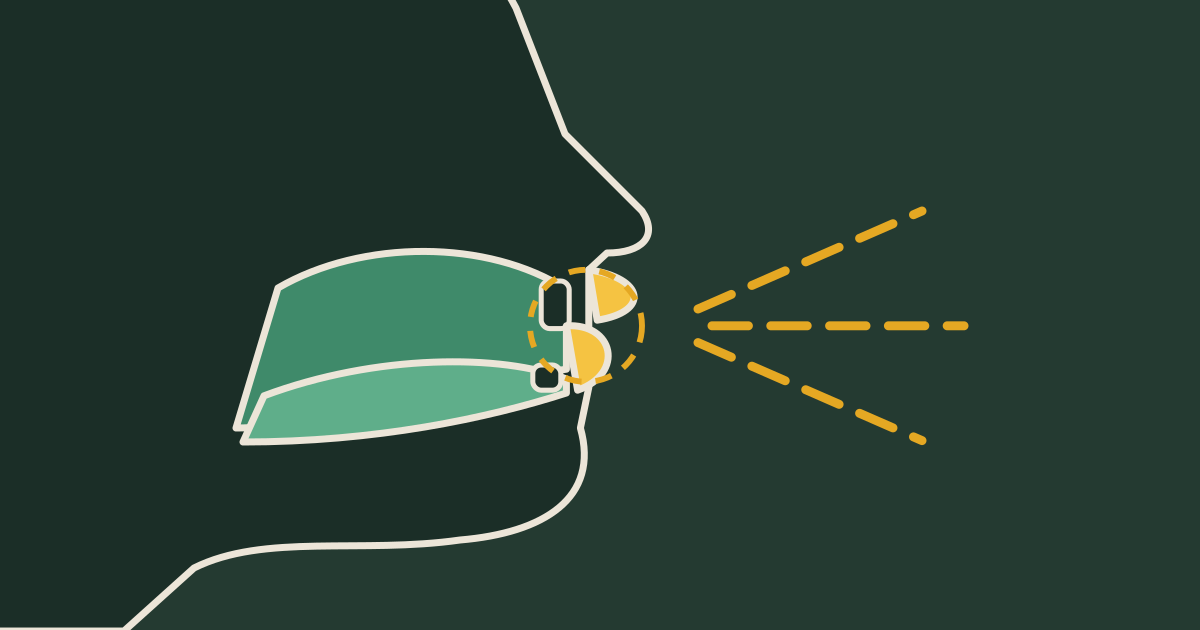
Start like the kick, lips together, but as they pop open, push the air through your lips so it becomes an "f" right after, "Pf", all in one quick sound. Bite down lightly on your bottom lip with your top teeth for the "f" part if that helps. Do 10. It should sound sharper and a bit hissier than the kick, like a snap. If it sounds exactly like your kick, make the "f" part longer and stronger. Beginners often add voice here too; check your throat with two fingers again.
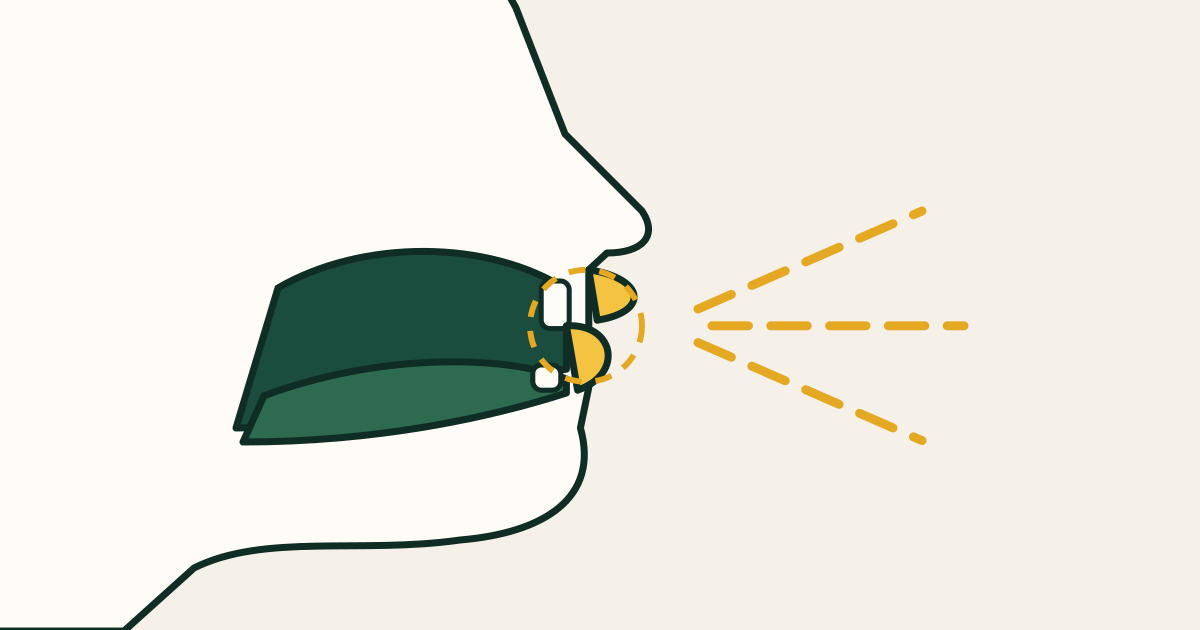
Snare: pop like the kick, then let the air hiss over your bottom lip. Show helpHide help
snare: The sharp, cracking drum on the off-beats; the beginner beatbox version is Pf.
Tip: Common mistake: using your voice. Real beatbox drums are voiceless; hum only when you mean to add a bass line or melody.
Say the phrase " and" out loud 4 times at a steady speed, evenly spaced, like a chant. That is the beat. Now replace the words: "boots" becomes the kick B, "and" becomes the t, "cats" becomes the Pf, and the last "and" is another t. So the beat is B t Pf t. Say it in words once, then in sounds once, alternating 4 times. If you lose the rhythm, go back to the words; the words carry the timing for you.
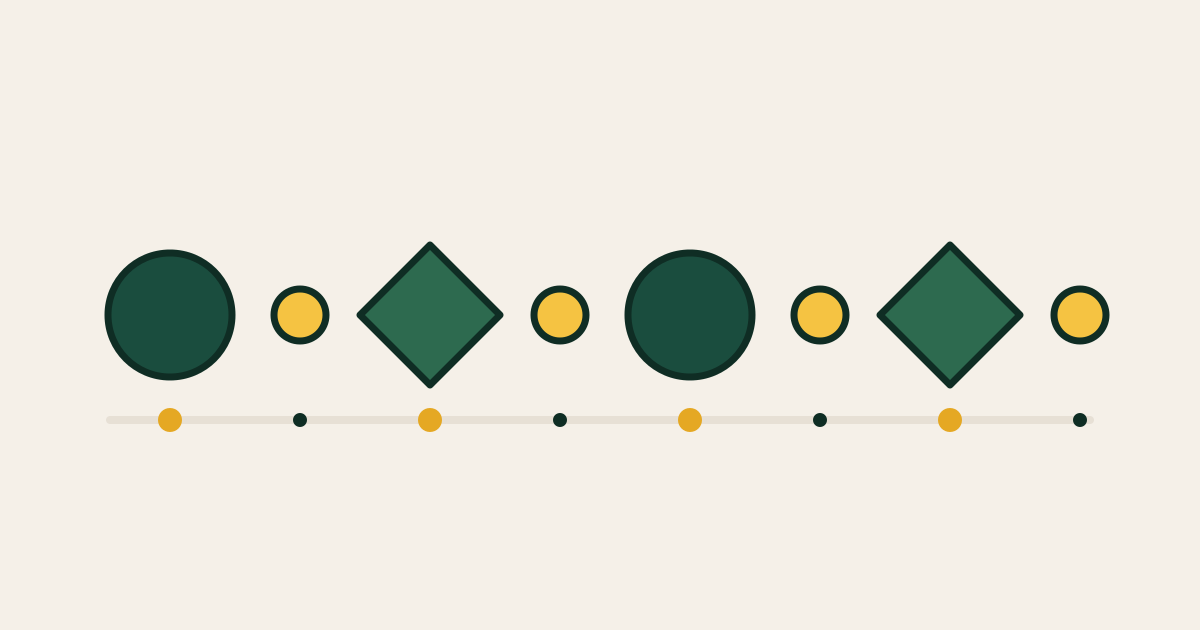
Big circle = kick (B), small dot = hi-hat (t), diamond = snare (Pf). Read left to right: B t Pf t, B t Pf t. Show helpHide help
boots and cats: A classic memory phrase whose words and rhythm map onto the basic beatbox beat.
Tip: Common mistake: using your voice. Real beatbox drums are voiceless; hum only when you mean to add a bass line or melody.
Now play B t Pf t eight times in a row without stopping, at a relaxed speed of about one sound every half second. Breathe in through your nose during the hi-hats so you never run out of air. Record it on your phone and play it back. You did it if you can hear clear kicks and snares and the timing stays even. That is a real beatbox beat. Next session, try doubling the kick at the start (B B t Pf t) and learn the inward K , which lets you breathe while you play.
Show helpHide help
Tip: Common mistake: using your voice. Real beatbox drums are voiceless; hum only when you mean to add a bass line or melody.

Tips
Common mistake: using your voice. Real beatbox drums are voiceless; hum only when you mean to add a bass line or melody.
Quiet and crisp beats loud and sloppy. Hold your phone close when recording instead of blowing harder.
Practice in short bursts. Two or three minutes a few times a day builds the lip and tongue control faster than one long session.
Breathe in through your nose between sounds. Running out of air is what stops most beginner loops.
Glossary
- kick drum
- The deep bass drum in a drum kit; in beatboxing, a voiceless B.
- hi-hat
- A pair of small cymbals that keep time with light ticks; in beatboxing, a short t.
- snare
- The sharp, cracking drum on the off-beats; the beginner beatbox version is Pf.
- boots and cats
- A classic memory phrase whose words and rhythm map onto the basic beatbox beat.
Communities
Resources
Frequently asked questions
Do I need to be good at singing?
No. The basic drum sounds are voiceless, so pitch and singing do not matter at the start.
Why does my snare sound like my kick?
Push more air through your lips after the pop so you hear a clear "f". Some people find a "k" or "ch" sound easier as a first snare; any sharp, hissy sound works.
I get dizzy or run out of breath. Is that normal?
It is common at first because beginners breathe out on every sound. Slow down, use smaller puffs of air, and sip air in through your nose on the hi-hats. Stop and breathe normally if you feel dizzy.
Can I practice quietly?
Yes. Beatbox at a whisper level close to your phone microphone. The sounds still need to be crisp, which is good practice anyway.
What should I learn after the basic beat?
The inward K snare (pulling air in sharply while making a "k"), the throat kick, and simple bass hums under the beat.
Something off in this guide?